Introduction
Real estate investing can be a lucrative way to generate income . Real estate investors purchase, manage, and sell properties to make a profit . This guide details what it means to be a real estate investor, including different types of real estate investments, strategies for success , and potential challenges.
Different Real Estate Investment Options
1. Investing in Residential Properties
- Single-Family Homes: Houses meant for single-family occupancy. These are popular among beginner investors due to their affordability and easier management .
- Multi-Family Properties: Properties that house multiple families, including duplexes and apartments. They offer higher rental income but need increased oversight .
- Vacation Rentals: Homes leased for short stays, typically via sites like Airbnb. These can yield more profit but may have higher vacancy rates and need more oversight.
2. Investing in Commercial Properties
- Office Buildings: Spaces leased to businesses for office use. They often have extended lease agreements , offering consistent revenue .
- Retail Properties: Buildings leased to retail businesses, such as shopping centers, malls, and storefronts. Success is tied to the tenants’ business performance .
- Industrial Properties: Industrial buildings such as factories and storage units. These have long leases and low management needs .
3. Industrial Real Estate
- Warehouses: Buildings for storing products and supplies. Demand is fueled by online shopping expansion .
- Manufacturing Facilities: Properties where products are manufactured. These need expert understanding to invest .
- Distribution Centers: Central points for shipping and logistics. Key in the logistics network.
4. Investing in Land
- Undeveloped Land: Land that has not been improved or built upon. It offers potential for development but can be risky .
- Developed Land: Parcels that are development-ready. Requires significant investment and development expertise .
- Agricultural Land: Farmland used for growing crops or raising livestock. Offers consistent profitability but requires farming expertise .
Strategies for Real Estate Investing
1. Long-Term Holding Strategy
- Overview: Purchase properties to rent out and hold them for the long term to benefit from rental income and property appreciation.
- Pros: Regular income, tax incentives, and increased property value over time.
- Cons: Demands management effort, capital commitment, and market dependency.
2. Fix and Flip
- Overview: Acquire, renovate, and quickly sell properties.
- Pros: Potential for high short-term profits, ability to improve property value.
- Cons: Significant risk, needs renovation expertise, reliant on market conditions.
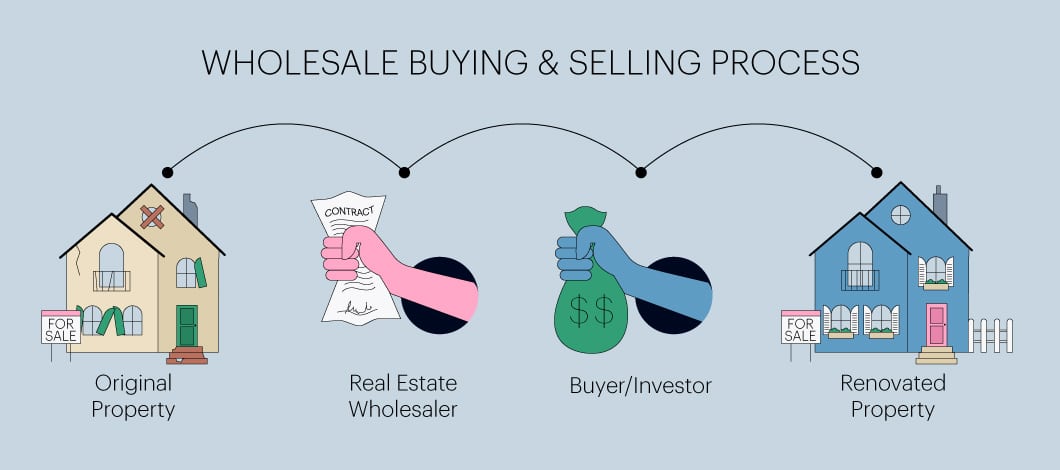
3. Property Wholesaling
- Overview: Locate undervalued homes, contract them, and transfer the contract for a fee.
- Pros: Low-cost entry, swift transactions, minimal management.
- Cons: Requires finding motivated sellers, building a buyer’s list, less profit per deal.
4. Investing in REITs
- Overview: Invest in a company that owns and operates income-producing real estate. REITs are traded on stock exchanges.
- Pros: Easy to sell, diversified holdings, passive returns, expert management.
- Cons: Volatile markets, limited investor control, management fees.
5. Crowdfunded Real Estate Investments
- Overview: Combine funds with others to invest in properties through online platforms.
- Pros: Small investment requirement, portfolio diversification, large project participation.
- Cons: Limited control, platform fees, investment risk.
Steps to Becoming a Real Estate Investor
Education and Research:
Learn the Basics: Gain knowledge about real estate trends, funding methods, property upkeep, and investment approaches.
Networking: Join investor groups, go to real estate seminars, and make connections with other investors.
Set Investment Goals:
Define Objectives: Determine your investment goals, such as income generation, capital appreciation, or portfolio diversification.
Set Investment Goals
- Define Objectives: Clarify your investment aims, focusing on income, growth, or diversification.
- Risk Tolerance: Assess your risk tolerance and choose investment strategies that align with it.
Develop a Business Plan
- Market Analysis: Research target markets, property types, and potential investment returns.
- Financing Strategy: Outline your funding strategy, considering mortgages, loans, and savings.
Build a Team
- Key Professionals: Gather a team of agents, lawyers, accountants, managers, and contractors.
- Networking: Maintain and grow your network of helpful professionals.
Start Small
- Initial Investment: Invest in smaller properties or easier projects initially.
- Learn and Adapt: Adapt your approach based on lessons from initial investments.
Scale Up
- Growth: Gradually increase the size and complexity of your investments as you gain experience and confidence.
- Diversification: Diversify by adding different properties and locations to your portfolio.
Challenges and Risks in Real Estate Investing | Potential Challenges and Risks
1. Market Volatility
- Economic Factors: Real estate markets can be influenced by economic changes, interest rates, and government policies.
- Mitigation: Keep up with market trends and adapt your strategies.
2. Property Management
- Tenant Issues: Dealing with tenant complaints, vacancies, and rent collection can be challenging.
- Solutions: Hire a property management company or develop strong management skills.
3. Financing and Cash how does wholesale real estate work Flow
- Funding Challenges: Securing financing and maintaining positive cash flow can be difficult.
- Strategies: Plan your financing well and maintain an emergency reserve fund.
4. Legal and Regulatory Issues
- Compliance: Make sure your investments adhere to legal requirements.
- Advice: Consult with legal professionals to navigate regulations and avoid pitfalls.
Final Thoughts
Real estate investing can be highly rewarding to grow wealth and meet financial objectives. By learning various investment strategies , creating a solid plan , and being prepared real estate wholesaling for dummies for challenges , you can navigate the world of real estate investing successfully . Whether you are a beginner or an experienced investor , continuous learning and adaptability are key to building a profitable portfolio.